
By Kieran on Aug 14, 2026, 9:50:25 AM

Stockpile dust control has a direct effect on how a site is perceived outside the boundary, in the local community and even nationally. A stockpile may be managed as part of a site's bulk handling process, but nearby residents and businesses experience it through visible plumes of dust close to their schools, dust deposition on cars and windows, material tracked onto roads, and repeated concern during dry or windy weather. Your environmental dust control strategy therefore needs to explain not only how dust is suppressed, but why each method is matched to the way the pile is being worked.

Read on as we explore the best stockpile dust control strategies to protect your community relations.
1. Map Your Stockpiles Against Receptors
A stockpile should be assessed by its position in relation to the people and places most likely to be affected. The presence of homes, offices, public footpaths, highways, parked vehicles, watercourses and nearby commercial premises all change the level of sensitivity around the pile.
This has practical consequences for environmental dust control. A stockpile exposed to prevailing winds towards housing may need surface sealing, a reduced exposed face, windbreaks or tighter working controls, whereas a pile set back from receptors but close to internal traffic may need stronger road and yard dust suppression instead. Community relations improve when the site can show that controls are based on where dust can travel, not only where material is stored.
2. Separate Working Faces From Sealed Surfaces
Active and static sections of a stockpile need different treatment. A face that is being loaded, dozed or reclaimed will be broken repeatedly, so a crusting treatment cannot remain intact across that working zone. Static slopes, upper surfaces and inactive sections, on the other hand, are better candidates for encapsulation because the treated surface has time to cure and remain in place.
This distinction is important when responding to concerns from local authorities, individuals, and community groups, preventing the site from claiming that a whole pile is sealed when part of it is being actively worked. A clearer approach is to define which surfaces are treated, which faces are operational, and what control applies during loading or reclaiming.
3. Use Polymer Crusting For Longer-Term Exposed Surfaces
If your stockpile is static or slow moving, a polymer-based crusting treatment can bind fine material at the surface. For instance, our DustCrust 2000 is a concentrated latex polymer emulsion designed to penetrate the upper surface and bind particles into a hardened crust layer. That type of treatment is beneficial where wind erosion, water erosion and material loss need to be controlled between handling cycles.
From a community perspective, crusting reduces the chance that exposed fines become visible during dry wind conditions, including evenings, weekends or periods when site teams are not actively working the pile. It also gives you a defined treatment point to log, inspect and reapply when the surface is disturbed.
4. Control Loading And Reclaiming As Short-Duration Dust Events
Some of the most visible dust releases occur during short handling periods rather than long storage periods and these are the ones most likely to draw community attention. Loader activity, dozer tracking, bucket impact, conveyor discharge and reclaim cuts all expose fresh fines. These releases can create a strong visual impression because they are sudden, localised and easy to see from beyond the site boundary.
Controls should therefore include the way the pile is worked. Reduced drop height, controlled discharge, temporary misting, foam at upstream transfer points, sheltered working faces and pausing high-dust activity during unfavourable wind directions can all reduce the chance of visible emissions leaving the site.
5. Eliminate Dust During Stacking Out
One of the most visible sources of dust on any stockpile site is generated at the point of stacking, where material falls off the end of a conveyor and onto the pile. This drop point is highly visible on site and is often seen from neighbouring areas too. The amount of dust released is affected by the nature of the material, the height of the drop and prevailing wind conditions.
Traditionally, dust at this point has been controlled by spraying water directly onto the material as it falls from the conveyor. This is an inefficient and ineffective use of water. Some sites have instead built structures over the stockpile to contain the dust, but this does not address the root cause, it only mitigates the visual element. These structures are also significant undertakings, inevitably costly, and generally unsuitable for retrofitting to existing operations.
Applying foam to the material before it discharges from the conveyor has proven to drastically reduce the dust released as material falls onto the stockpile. This approach is suitable for primary crusher stockpiles and stackers working in stockpiles, adds very little moisture, and achieves significant reductions in dust.
6. Treat The Pile Toe, Site And Access Routes
Stockpile dust control fails if loose material is allowed to collect around the pile base and then move through the site. Spillage at the toe can be crushed by vehicle tyres, dried by wind and spread onto haul roads, loading areas or site exits. Once that happens, the community concern may shift from the stockpile itself to dust on local roads, vehicles or nearby surfaces.
Road and yard suppression, wheel management, routine scraping and drainage control should sit alongside stockpile treatment. The aim is to stop escaped material becoming a secondary dust source after it has already left the pile.
Find Out More
To find out more about our environmental dust control strategies for active and static stockpiles, please contact one of our experts today by clicking here, or by calling 01530 441233.

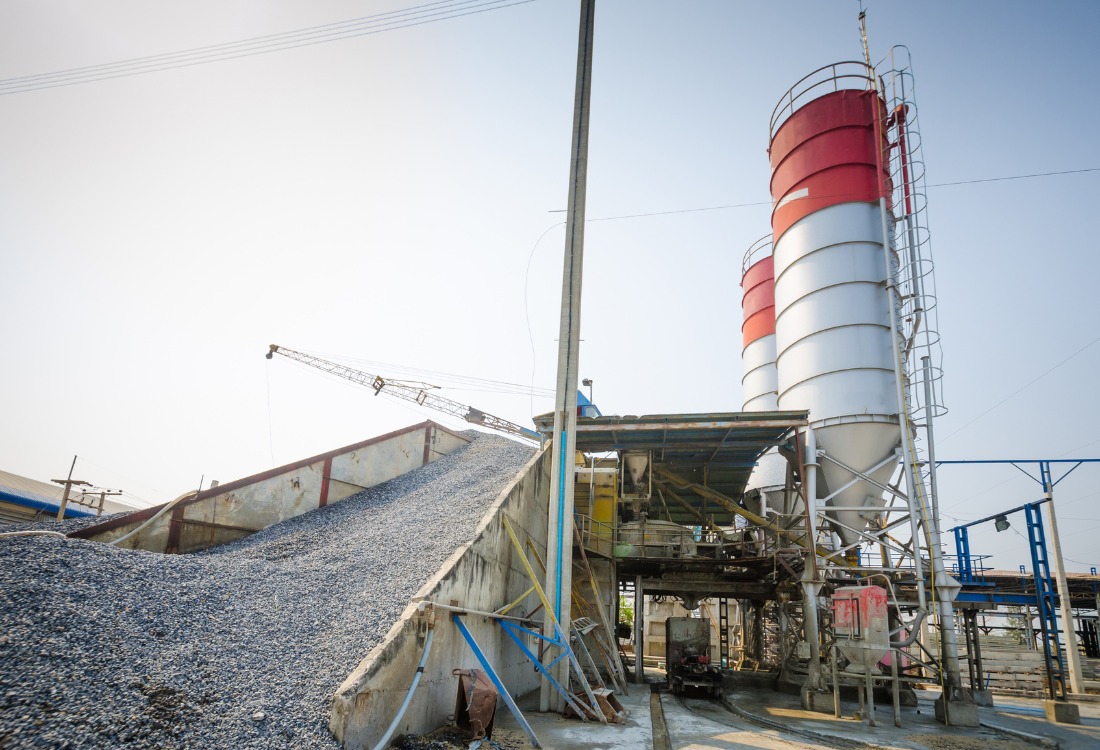
Image Source: Envato
.png)
Industrial Safety: Dust Hazard Surveys and Essential Control Measures

How an Automatic Misting System Improves Dust Control Measures
No Comments Yet
Let us know what you think