
By Kieran on Apr 9, 2026 11:00:00 AM
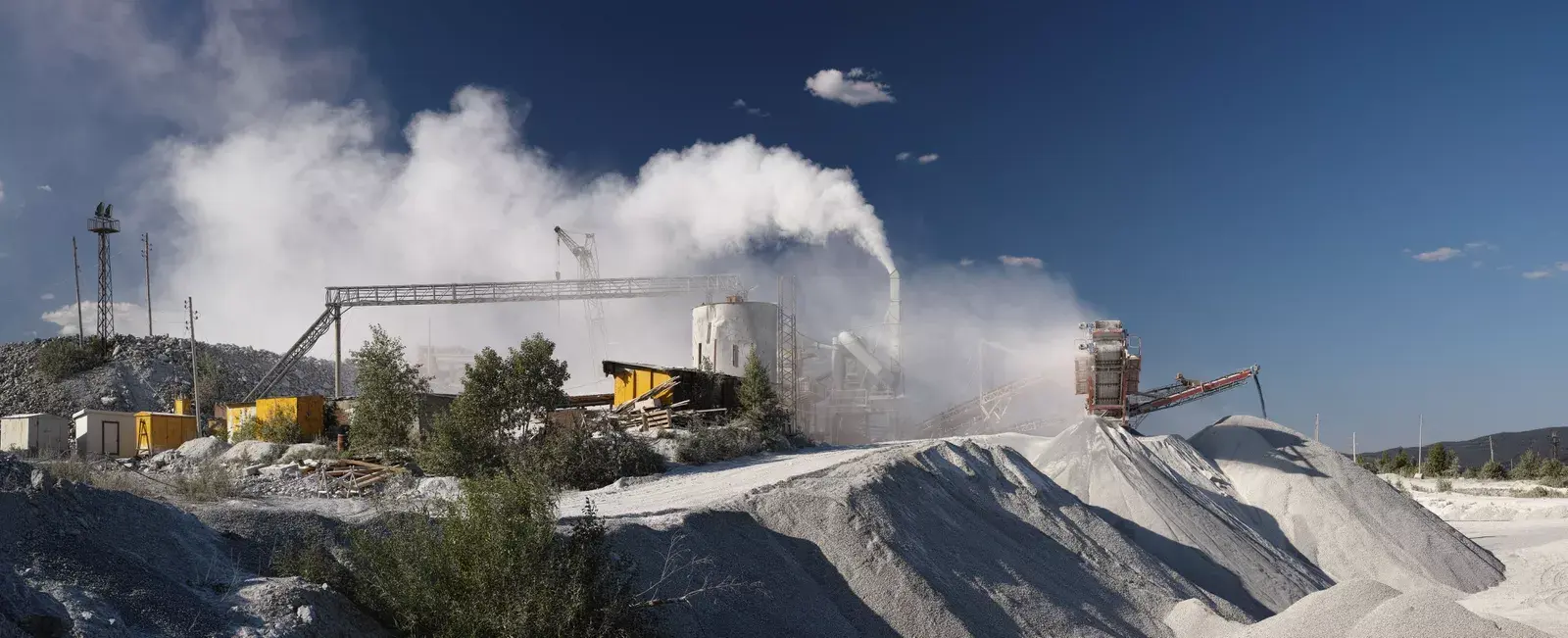
Respirable crystalline silica, often referred to as RCS, remains one of the most significant occupational health risks in quarrying, mining, construction and bulk material handling environments.

Understanding the legal limits, how they are measured and what they mean in practice is critical not just for compliance but for the long-term protection of your greatest asset – your workforce.
What Is Respirable Crystalline Silica?
Crystalline silica is a naturally occurring mineral that's found in a variety of construction materials, including sand, stone, limestone, concrete, mortar and aggregates.
When these materials are cut, crushed, drilled or even conveyed from one site to another, fine particles are released into the air. The smallest particles, known as respirable crystalline silica, are small enough to penetrate deep into the lungs of anyone nearby who is breathing without a protective mask.
Prolonged exposure can lead to serious health conditions, including:
- Silicosis (a potentially fatal lung condition)
- Chronic obstructive pulmonary disease (COPD)
- Lung cancer
As such, strict silica dust exposure limits are enforced in the UK under Health and Safety at Work and Control of Substances Hazardous to Health (COSHH) legislation.
What Is The Silica Dust Exposure Limit In The UK?
In the UK, the Workplace Exposure Limit (WEL) for respirable crystalline silica is:
0.1 mg/m³ (milligrams per cubic metre) Measured as an 8-hour time-weighted average (TWA)
This limit is defined under the COSHH Regulations.
In practical terms, this means that a worker’s average exposure to respirable crystalline silica over an 8-hour working day must not exceed 0.1 mg per cubic metre of air.
It is important to understand that this is a maximum legal limit, not a target. Employers are required to reduce exposure as far below this level as your operations will reasonably permit.
Why The Exposure Limit Matters to Your Business
Silica related disease is not something that manifests immediately. It develops over the space of years or even decades. According to occupational health guidance, repeated exposure above safe thresholds significantly increases the risk of developing silicosis and other respiratory illnesses.
In quarrying and mining operations; crushing, screening and vehicle movements generate fine dust on a near-constant basis. Therefore, maintaining compliance with silica dust exposure limits is a daily operational requirement.
Failure to monitor and control RCS can result in:
- Enforcement action from the Health and Safety Executive (HSE).
- Prosecution and fines.
- Long-term health claims.
- Increased insurance and liability costs.
- Reputational damage.
How is Respirable Crystalline Silica Monitoring Carried Out?
Compliance is not based on guesswork. It requires structured respirable crystalline silica monitoring.
Monitoring typically involves:
- Personal sampling pumps worn by employees
- Sampling heads positioned within the breathing zone
- Laboratory analysis of collected dust samples
- Comparison of results against the 0.1 mg/m³ WEL
This process allows sites to identify high-risk tasks and implement targeted controls.
Regular respirable crystalline silica monitoring is especially important in:
- Crushing operations
- Screening plants
- Conveyor transfer points
- Loading and bulk handling areas
- Haul roads in dry conditions
Monitoring data also supports internal audits and demonstrates proactive compliance during HSE inspections.
What Influences Silica Dust Exposure Levels?
Exposure levels can vary significantly depending on factors such as material composition, moisture content, wind conditions, plant layout, vehicle movements and the type of dust suppression systems in place.
Even small changes in process or throughput can affect airborne concentrations.
That is why relying on PPE alone is not sufficient. Control measures must focus on reducing dust at source.
Controlling Exposure: Practical Measures
To remain within silica dust exposure limits, sites should implement layered control strategies.
These include:
1. Water-Based Dust Suppression
Water spray systems applied at crushing points, conveyor transfers and haul roads reduce airborne dust by binding fine particles.
2. Foam Dust Suppression
Foam systems improve wetting efficiency while adding minimal moisture. This can be particularly effective in bulk material handling environments.
3. Enclosure And Extraction
Where feasible, enclosing dusty processes and installing extraction systems can significantly reduce airborne RCS.
4. Traffic Management
Reducing vehicle speed on haul roads and maintaining surface moisture helps control road dust, a major contributor to respirable crystalline silica exposure.
5. Training And Awareness
Workers must understand:
- The health risks of RCS
- The importance of control measures
- Correct use of respiratory protective equipment where required
Is 0.1 mg/m³ a Safe RCS Level?
It's important to clarify that the Workplace Exposure Limit does not represent a completely risk-free level, it is not a target to aspire to. Even exposure below the WEL may carry some long-term risk if exposure is sustained over many years.
This reinforces the legal requirement to reduce exposure as far as reasonably practicable, rather than simply aiming to stay just under the limit.
Book a Free Site Survey Today
If your site handles aggregates, limestone, cement raw materials or other silica-containing materials, it is worth reviewing whether your current controls are sufficient.
Understanding the permissible exposure limit is one thing. Demonstrating that your systems consistently keep exposure well below that limit is another.
A structured site survey allows you to:
- Identify high-risk dust generation points.
- Review current suppression methods.
- Assess alignment with silica dust exposure limits.
- Strengthen your respirable crystalline silica monitoring strategy.
- Implement practical, engineered control measures.
Why not arrange a free, no-obligation site survey to discuss tailored dust suppression solutions with our team? Book Now.
Image Source: Envato
Share this
No Comments Yet
Let us know what you think